A royal scribe in the court of Amenhotep III (1390 - 1352 B.C), Amen-Hotep son of Hapu, was deified during Ptolemaic times (332 - 32 B.C) as a man of great wisdom. His cult center was at KARNAK TEMPLE in THEBES (Modern LUXOR), where he was worshipped as a healer and benefactor. Petitioners brought their requests and prayers to Amenhotep in the hope that he would serve as an intermediary for their prayers to the great god AMUN.
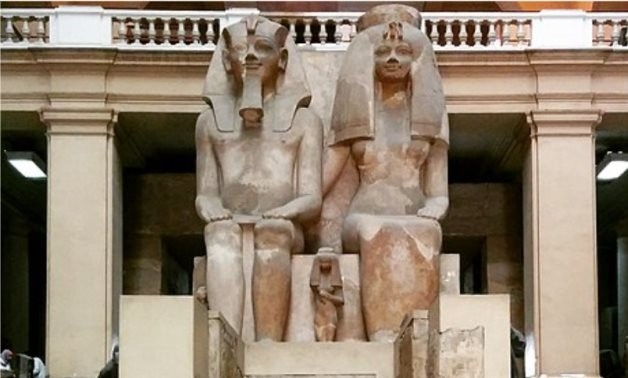
Amenhotep was a northerner born in the Delta, but he spent most of his 80 years in Thebes in the service of his king. Working his way up through the ranks in the court of Amenhotep III, he impressed superiors with his ability to recruit men for the pharaoh's army and to supervise monumental building projects. He earned the title chief architect of all the king's building projects. As Amenhotep III's most trusted official, Amenhotep-son-of-Hapu was depicted, along with the king, on the wall of the great temple at Soleb in southern Nubia. A man of many talents, Amenhotep-son-of-Hapu became manager of the vast estates of the royal family and was rewarded with his mortuary temple on the West Bank at Thebes. He was enormously popular among the people, and his mortuary temple soon became the center of his growing cult. A copy of a royal decree from the Twenty-first Dynasty grants permission for the construction of his temple, the only nonroyal temple to be built among the royal monuments on the West Bank.
Amenhotep-son-of-Hapu, despite his fame, seemed to be most pleased with his title as a royal scribe, for his statues often show him sitting with a roll of papyrus across his knee. Many of Amenhotep- son-of-Hapu's statues were found in Karnak temple, and their inscriptions tell us much of what we know about him.