Coffin Texts in Ancient Egyptian
Coffin Texts is a group of magical spells compiled during the Middle Kingdom (2055–1650 B.C.) to assist the deceased in their journey to the NETHERWORLD. With the collapse of the Old Kingdom (2688–2181 B.C.) and the period of lawlessness that followed, the First Intermediate Period (2181–2055 B.C.), robbers opened the Giza pyramids. For the first time, ordinary people could see the magical spells and prayers that helped the king journey safely to the next world. When the magic spells, or Pyramid Texts, became known, they must have inspired the new custom of inscribing prayers and spells on Middle Kingdom coffins that you will discover during Egypt tours. There are a lot of coffins to see in different places during Egypt day tours such as The Egyptian Museum in Cairo, the Valley of Kings in Luxor, and more.
One of the innovations of the Coffin Texts is that the sun god RE, who previously ruled the Underworld alone, now shared his dominion with OSIRIS, the god of the dead, who had risen to prominence as the Judge of the Underworld. Sun god RE is included in our Egypt travel packages, so i advise you check our Luxor day tours to visit Karnak temple, there you will attend the sound and light show to explore the history of Egyptian Pharaohs. Another idea from the Coffin Texts was that the deceased would be required to labor in the FIELD OF REEDS. The Coffin Texts followed no particular order or structure; they were a group of various spells designed to help the deceased reach the Netherworld. Because the spells were written on the surface of the coffin, space was limited, and frequently words or entire passages were omitted, which made the spells challenging to translate.
What do the coffin texts say?
There are more than a thousand coffin spells that you will explore during Egypt luxury tours, but many are repetitious.
Frequently, they refer to magic or the magician's power. Two kinds of magic are mentioned in the Coffin Texts: negative and positive. In the opposing group, the spells assure the deceased that those who might work malicious magic on him will not harm him. These spells say, "I will not listen to magic" or "my soul shall not be seized by magic." In addition to worrying about "bad magic," there was also the fear that the deceased's magic would be taken from him by a god disguised as a crocodile. The spell to combat such a catastrophe was:
Get back! Go away! Get back, you dangerous one! Do not come upon me, do not live by magic! May I not have to tell this name of yours to the great god who let you come: "Messenger" is the name of one, and "Bedjet" is the name of one. If you want to enter ancient Egypt in the pharaonic era, check our Aswan day tours, you will find many places that tell about the coffin in ancient Egypt such as Edfu temple, Abu Simbel temple, Unfinished Obelisk and more.

The crocodile speaks
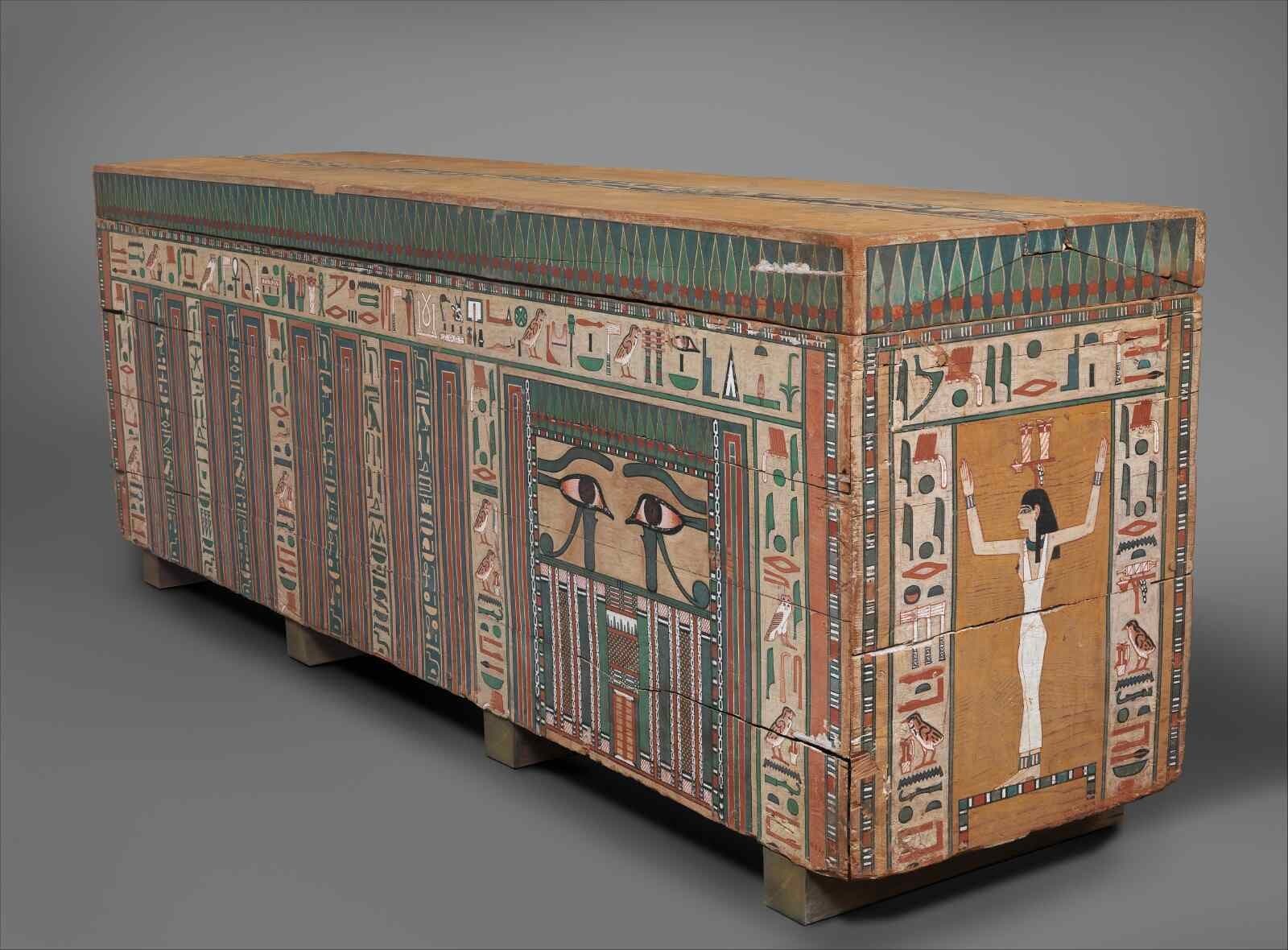
Coffin Texts were intended to help the deceased reach the Netherworld safely. There were spells for not dying a second death and for not having to do any work in the next world. (Photograph by Sara Wells)
and these phrases frequently include, "I have filled my belly with magic." Sometimes the deceased could take possession of the power of other magicians: "I eat of their magic, I gulp down their powers. My strength in me is more than theirs. Their powers are with me.
The Egyptians wanted to be sure that once they had the power, they would not lose it, so they included spells to ensure their magic could not be stolen. All this historical info will be relevant during Egypt Classic tours.
Some of the spells in the Coffin Texts required more than words and included instructions for how the magic was to be spoken. The spell also shows us how the Egyptians thought their magic worked. For example, the spell to overcome foes (Spell 37) ends with "May you break and overthrow your foes and set them under your sandals. The accompanying instructions say that the words must be spoken over a wax figure of the enemy and that his name was to be incised on the heart of the figure with the bone of a cynodonts fish.
One of the most curious facts about the Coffin Texts is that, while many gods were named and invoked, neither the sun god Re or Osiris, the god of the dead, was the most important. Instead, SHu.
The god of air is the principal god in the texts. One possible explanation is that the Egyptians believed one had to travel through the sky to reach the Netherworld. In this case, Shu's help would be crucial. A common phrase on the coffins was, "I have gone to Shu. I have climbed on the sunbeams." As the god who holds up the sky, Shu was a means by which the deceased reached the Netherworld and a symbol of strength for the dead to make the arduous journey: "I am strong as Shu is strong, I am hale as Shu is hale, I am beneath the sky, I strengthen its light." The Coffin Texts focus on Shu rather than on Osiris because the priests who wrote them were more concerned with the journey to the Netherworld than with what would happen once the deceased arrived. Very few of the Coffin Texts mention the Netherworld. It was almost as if the Egyptians were merely concerned with avoiding the perils that might end the journey or reduce their powers; once they arrived in the "west," they would be safe. The Coffin Texts were most popular in the Middle Kingdom. During the New Kingdom, they were replaced by the more elaborate book of Dead.