One of most important religious events in Egypt, The festival of Opet celebrated the journey of Amun from Karnak to Luxor temple and the symbolic sexual union of Amun and the king's mother, so that she could give birth to the king's royal ka. The festival of Opet took place in the second month of the season of the three weeks in summer when the Nile flood reached its crest. The cult statues of Amun and his wife and son, Mut and Khonso, and statues of the king and his ka were carried with a great ceremony along an avenue of sphinxes from Karnak Temple to Luxor temple. A distance of about three miles separates the two temples. Along the avenue of sphinxes were several resting spots called "bark stations" or kiosks, so priests carrying the ceremonial boat with the shrine and cult statue could stop and rest. It was here that the people who lined the processional way could approach the statue of Amun, which remained hidden inside the shrine unless a breeze blew aside the curtain.
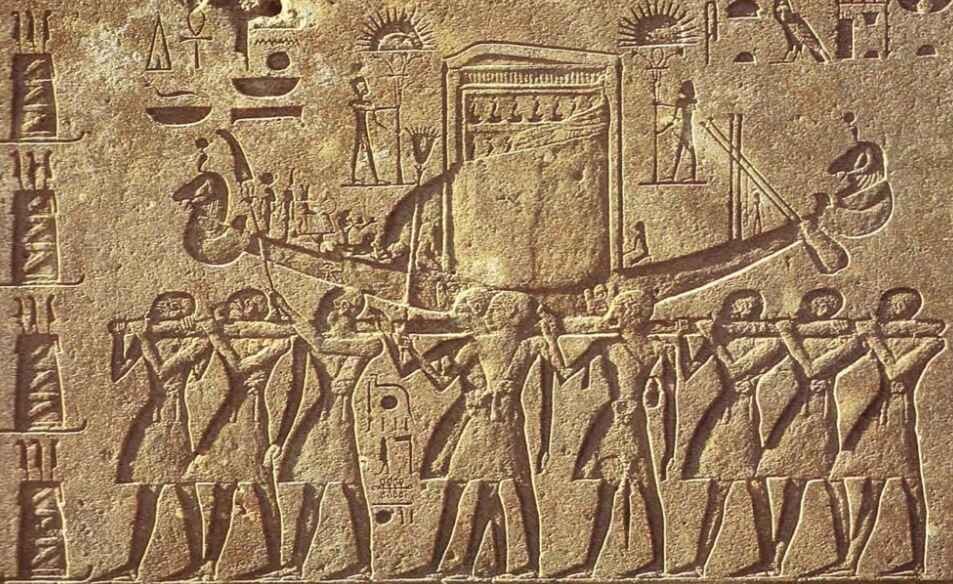
When the procession reached Luxor Temple, it was greeted with a joyous reception by various groups of dancers, singers, and musicians. The birth house had been prepared as a place for the king to rest and experience a symbolic rebirth and rejuvenation and where the royal ka magically entered his body. His emergence from the birth house signaled the renewal of royal authority and affirmed the divine nature of the king. We have a great deal of information about the Opet Festival because the Eighteenth Dynasty king Amenhotep III (1390 - 1352 B.C) commissioned the Colonnade Hall at Luxor Temple, and his grandson Tut Ankh Amun decorated the walls with scenes from the Opet Festival. The scenes carved on the west wall show the procession from Karnak to Luxor, and the scenes on the east wall show the procession sailing downstream on return to Karnak.