A container to hold a mummified body. Coffins were either anthropoid (in the shape of a human body) or rectangular. Egyptian religion required that the body be intact so it could resurrect in the next world. Early burials in sandpits dried and preserved the body, but wind erosion or wild animals often exposed the corpse. As a protective covering for the body, the first coffins were made of woven reeds and later of wood.
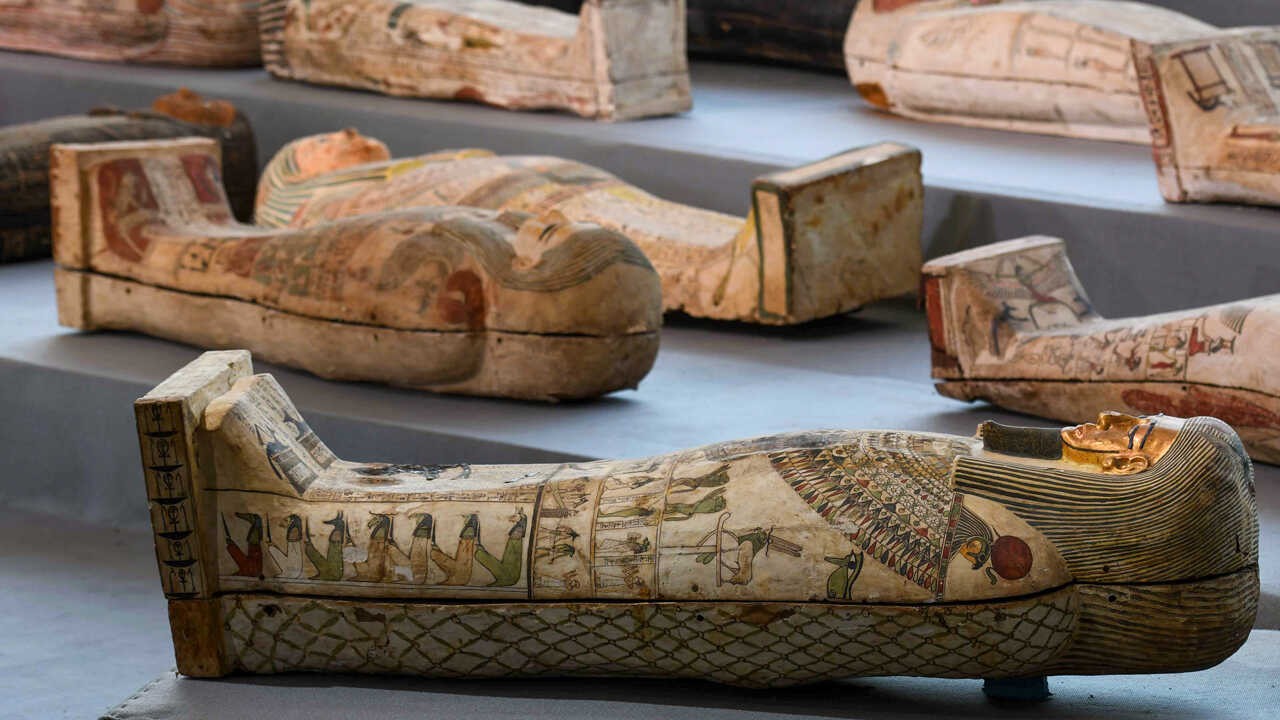
During the Old Kingdom, wood coffins and stone sarcophagi were viewed as a place of rest for the deceased (see SARCOPHAGUS). The coffin fit inside the stone sarcophagus. The lids of the sarcophagi were so heavy that they had to be raised and lowered with ropes. The difference between a coffin and a sarcophagus is mainly the material from which each is made. One fits inside the other: The innermost (the coffin) is made of wood, and the outer one (the sarcophagus, Greek for flesh-eater) is made of stone. In the Middle Kingdom the most popular- fins were rectangular, wooden, and often painted with funerary motifs. These coffins could be highly decorated, both inside and out, with scenes of the deceased sitting in front of a sumptuous offering table. Most Middle Kingdom coffins were decorated with the udjat eye. Two EYES OF HOURS were painted on the outer panel of the coffin facing east, perhaps so the deceased could still have a view of the world of the living. Anthropoid coffins in the shape of the human body were made in the Twelfth Dynasty (1985 - 1795 B.C) and continued to the end of Egyptian civilization. This shape was associated with OSIRIS, the god of the dead, and the coffins were elaborately painted with religious and mythological scenes.