GODS OF FERTILITY See Osiris and Min
In order to worship the gods in their temples, several festivals were organised throughout the year in ancient Egypt. Some of these festivities were regional, and others were observed all across the country. A celebration would often start with a priestly procession of the cult figure, accompanied by musicians and dancers. The statue would occasionally move in a procession between temples, staying at the second temple for a predetermined number of days before returning. During the Opet Festival, an Amun statue was transported from Karnak to the Luxor Temple.
Ramses III engraved a "calendar of festivals" with a list of about 60 distinct holidays on the southern wall of the Medinet Habu temple on the west bank of the Nile at Luxor. A detailed list of prerequisites for each feast as well as information on which treasury will cover each festival of Amum are supplied.
The eight "feast of heaven" days are also listed, along with the 365 daily offerings. Some of the biggest annual festivals are listed below:
The King's Coronation Celebration took place on the 26th of Pakhons, the ninth month (originally one day, but lengthened to 20 days). The Festival of the New Year coincides with Sirius, the star with the greatest brightness, rising in the sky. The Festival of Opet lasts 24 days and begins on the nineteenth day of paophi, the second month. Amun, Mut, and Khonsu parade at the Lovely Festival of the Valley.
The number of bread loaves needed for a festival's food offerings varied substantially; one needed just 84 while another needed more than 4,000. The surplus food that the priests didn't eat during the feast was given to the populace. A mythical region in the western sky where crops in the fields reach incredible heights is known as the FIELD OF REEDS (also known as SEHET AARU or the ELYSIAN FIELDS).
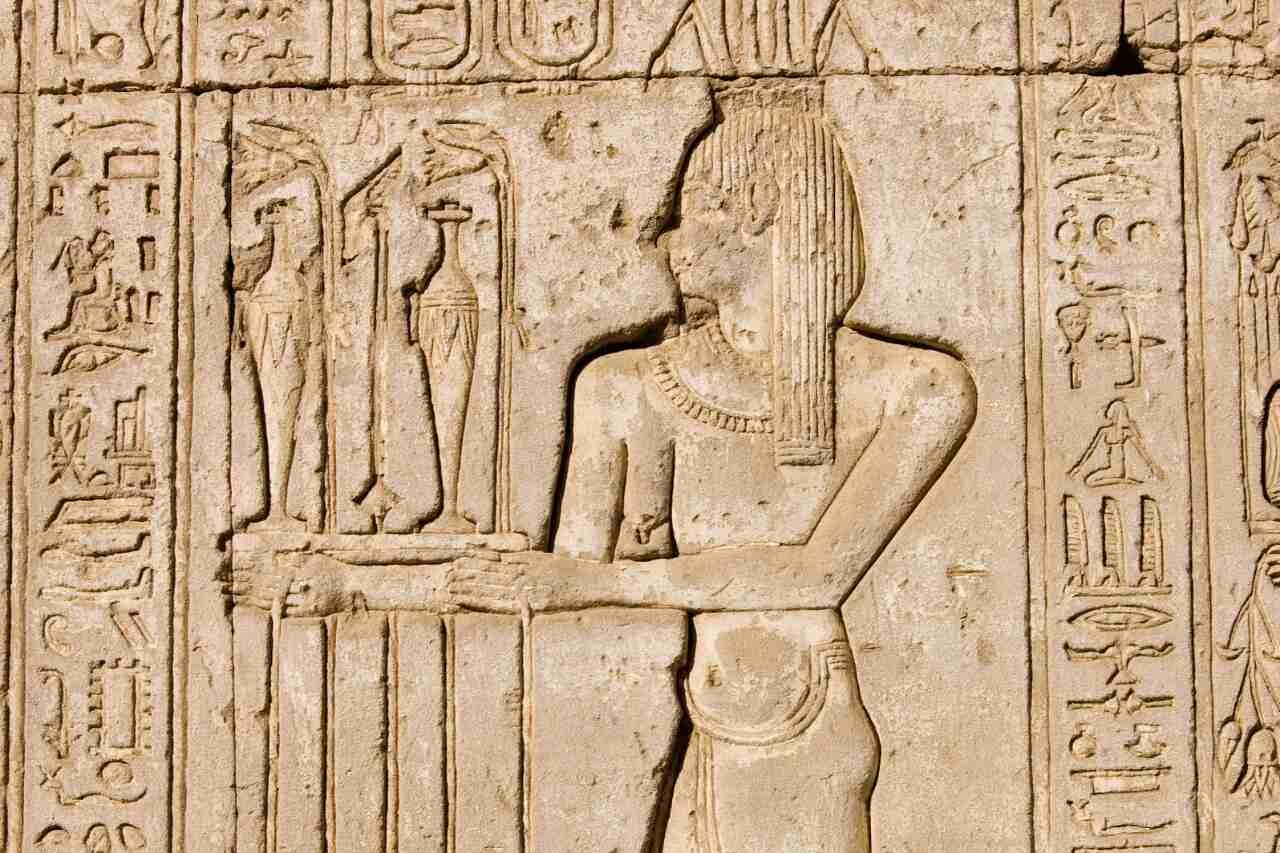
The goddess Neheb-Kau, who was connected to the Field of Reeds, was frequently depicted as a snake with wings and the limbs and legs of a woman. She has two pots of food for the hereafter in her hands. The Pyramid Texts are the first to mention the Field of Reeds:
One who is cleaned at the Field of Reeds is said to be cleansed. In the Field of Reeds, Cleansed is Re One who is cleaned at the Field of Reeds is said to be cleansed. This Unas in the Reeds Field is cleansed. Hand of Unas in Re's hand Take his hand, Nut! Shu, raise him! Shu, raise him!
In the Middle Kingdom (2055 - 1650 B.C), the Coffin Texts suggest that the deceased will be required to labor in the Field of Reeds, and at about the same time the Coffin Texts were written, magical figures called ushabtis were introduced. Each ushabti was given a magical spell so that when the deceased was called upon to work in the Field of Reeds, the ushabti would answer for the deceased and perform the work. The concept of the Field of Reeds was expanded during the New Kingdom (1550 - 1069 B.C) when it was regularly included in the vignettes that decorated the Book of the Dead. According to Osirian mythology (see Chapter 145 of the Book of the Dead), the deceased was required as part of his passage into the next world to spend time working in the Field of Reeds.
In another, there was a legendary region known as the Field of Reeds, where the fields yielded astonishingly large crops. The dead is shown with his wife harvesting grain in this tomb mural. The deceased's ultimate objective, according to the (Images by Pat Remler) version, was to buy a piece of land after his trip through the Underworld was through and he had been cleared of all charges (see Weighing of the Heart Ceremony).
The Field of Reeds, the Netherworld, and his summary of his earthly efforts were symbolised by this. The dead are regularly seen in the Book of the Dead's vignettes ploughing, sowing, and harvesting, sometimes with their wives, and they are always clothed in their finest clothing as if they were on a royal tour. Although the exact location of the Field of Reeds is uncertain, it appears from the Book of the Dead that it is somewhere within the Netherworld.
According to legend, the wheat and barley that grew to such enormous heights in the Field of Reeds provided the dead with food akin to the nectar and ambrosia of the gods. That wasn't the same as the real food sacrifices made for the deceased on Earth. Several literature throughout the years have posited that the Field of Reeds may have also existed on Earth, either in the eastern Delta, on a delta island, or in the distant Kharga Oasis. In the following years, the expression "field of reeds" has evolved to mean either death or the Netherworld.