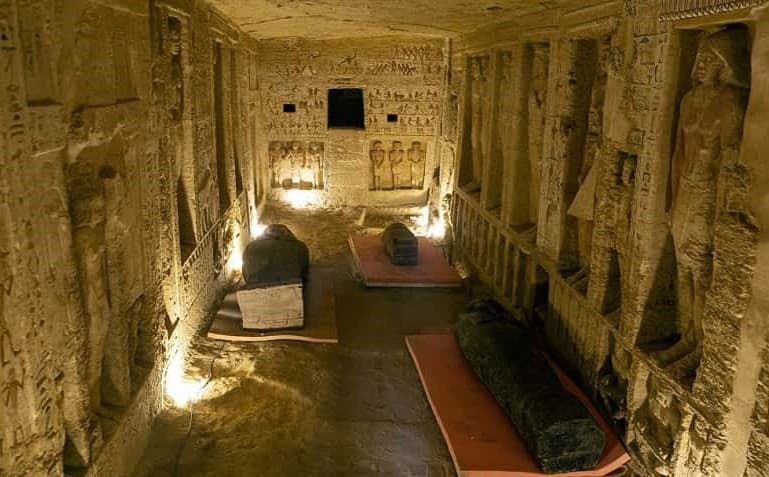
Saqqara is quite possibly of the most popular archeological site in Egypt. It is situated around 30 km south of Cairo and is home to various old landmarks, including the Step Pyramid of Djoser. Nonetheless, quite possibly of the most captivating and novel tombs in Saqqara is the Wahtye tomb. In this blog, we will investigate the set of experiences and meaning of this tomb.
History of the Wahtye Tomb

The 5th dynasty of ancient Egypt, which ruled from around 2494 to 2345 BC, is when the Wahtye tomb was built. It was constructed for Wahtye, a high-ranking official who served as King Djedkare Isesi's "Chief of the Great State" and held the title of "Chief of the Great State". The tomb lies next to the King Unas pyramid in the western section of the Saqqara necropolis.
The Wahtye tomb is distinctive in a number of respects. First of all, it is one of the rare complete tombs from the fifth dynasty. Second, with a length of nearly 50 metres, it is one of the biggest tombs in Saqqara. Last but not least, it has some of the most elaborate and well-preserved ornamentation of any tomb from this time period.
Architecture and Design of the Wahtye Tomb

The Wahtye tomb is made up of several halls, rooms, and passageways that are all adorned with richly coloured and intricate reliefs. A sizable front with two columns and a central door designates the entrance to the tomb. Wahtye figurines, scenes from everyday life, and sacrifices to the gods are all adorning the columns.
Visitors are welcomed by a lengthy tunnel within the tomb, which leads to the first room. There are various niches in this room where sculptures of Wahtye and his relatives formerly stood. From there, visitors go through a series of more compact rooms and halls, each of which is embellished with images from daily life and religious rituals.
The Wahtye tomb's burial chamber ranks among its most spectacular elements. An extremely constrained passageway leads to this chamber, which lies at the end of the tomb. This enormous sarcophagus, which would have housed Wahtye's mummified remains, is located in the rectangular room itself. Wahtye is shown being welcomed into the company of the gods in one of the scenarios depicted on the walls of the chamber that depict the afterlife.
Significance of the Wahtye Tomb

In the first place, The Wahtye tomb is critical because of multiple factors. it gives important knowledge into the life and convictions of high-positioning authorities in old Egypt. The point by point beautifications in the burial place offer a brief look into the day to day existence, strict practices, and funerary customs of the exclusive class.
Second, the Wahtye tomb is significant for its specialty and design. The burial place contains the absolute most very much protected and unpredictable improvements of any tomb from the fifth tradition. The vivid reliefs and great engineering show the expertise and innovativeness of the antiquated Egyptian skilled workers.
At long last, the Wahtye tomb is critical for its verifiable worth. It is one of a handful of the burial places from the fifth line that has endure flawless, giving significant data about the entombment practices of this period. The tomb likewise gives proof of the cozy connection between high-positioning authorities and the decision pharaohs of the time.
Visiting the Wahtye Tomb
The Wahtye tomb is available to guests as a component of the Saqqara necropolis. Guests can buy tickets at the entry to the site and are allowed to investigate the burial place and different landmarks nearby. Notwithstanding, guests ought to know that a few region of the tomb might be cut off for rebuilding work or for safeguarding purposes.