CAIRO CALENDAR A magical calendar devised by the ancient Egyptians to determine whether each day would be a good day or a bad day to embark on a certain activity. In 1943, the Egyptian Museum in Cairo bought a rolled-up papyrus titled An Introduction to the start of Everlastingness and the end of Eternity. It was written in hieratic, a cursive script that was often used instead of hieroglyphs, and made predictions about every day of the year.
The PAPYRUS was composed of three independent volumes, each of which dealt with a different day of the year. Unfortunately, the first and third books could not be translated due to severe deterioration. This part of the second book which later came to be known as the Cairo Calendar was almost finished. Three portions made up each day of the year. The following translation was taken from Bob Brier's 1980 book, Ancient Egyptian Magic.
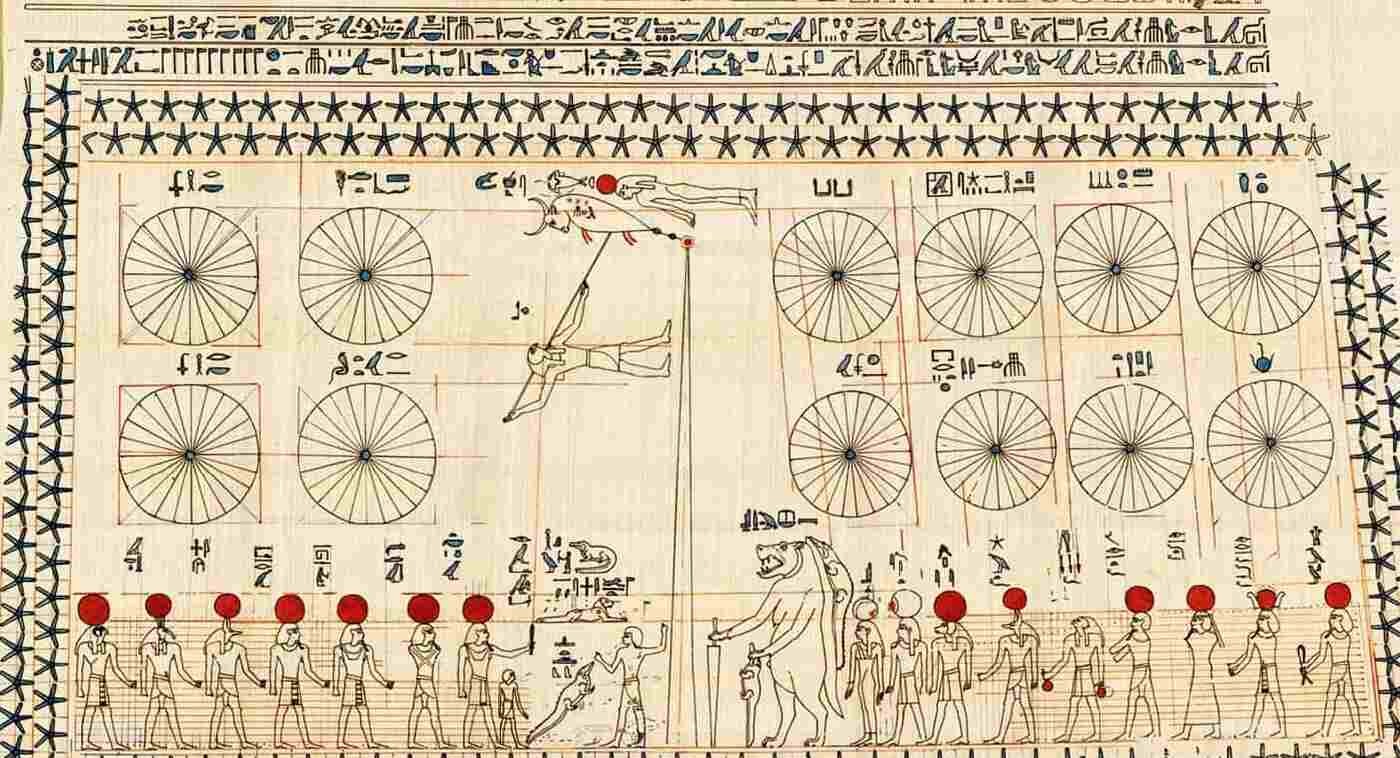
- The first section tells of the day's auspice or pre-diction the days could be favorable, mostly favorable, very favorable, adverse, mostly adverse, and very adverse. As it turned out, most days in the Cairo Calendar were either very favorable or very adverse, and only a few days were expected to be partially good or partially bad.
- The next section determined very good and very bad days, according to events in the lives of the gods. For example, the day that commemorated the battle between Set and Horus, when Horus lost his eye, was predicted to be a bad day.
- Section three explained how to behave as a result of the prediction again based on an event in the lives of the gods. On the day that commemorates the battle when Horus lost his eye in battle, the reader is advised not to leave the house.
- For all of its interesting mythological references, the Cairo Calendar is not fully understood. The calendar mentions many minor gods that undoubtedly were known to the ancient Egyptians but are unfamiliar today. Various mythological themes are intertwined, and the mythological references are sometimes incomplete